
Updated: 1 May 2025

As sustainability becomes increasingly important in the fashion industry, the sportswear sector is also affected by this transformation. Major brands such as adidas and Nike are taking significant steps in sustainability in an effort to fulfil their environmental and ethical responsibilities. But which of these two giants is more sustainable from an environmental and ethical perspective?
Nike is an American company founded as Blue Ribbon Sports in January 1964 and officially renamed Nike, Inc. in May 1971. It has approximately 1,000 Nike retail stores worldwide, and a large share of Nike’s revenue comes from footwear; revenue in that segment exceeds US$30 billion, while adidas generated approximately US$12 billion in the same sector. adidas was founded in 1949 by the German Adolf Dassler after a dispute between him and his brother Rudolf (who later founded Puma).
With combined revenue of approximately US$75 billion in 2023, Nike and adidas are the world’s most dominant sportswear and sporting-goods companies, and adidas is the world’s second-largest sportswear company after Nike. What do these figures mean for the two companies’ sustainability goals?
Is adidas sustainable?
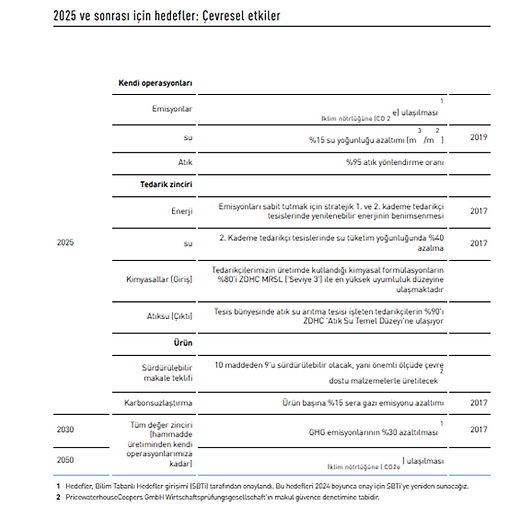
adidas does not publish its annual reports in Turkish, but current information about its sustainability efforts and goals is available on its website. In its 2023 Annual Report, adidas grouped its strategic priorities for reducing environmental impacts under four main headings: carbon reduction, circularity, biodiversity and water management. The company aims to define 90% of its products as sustainable and achieve climate neutrality across its entire value chain by 2025. Its environmental goals include achieving climate neutrality in its own operations by 2025, reducing greenhouse gas emissions across the entire value chain by 30% by 2030 compared with 2017, and achieving climate neutrality across the entire value chain by 2050. To reach these goals, the company is taking steps such as reducing energy consumption, switching to renewable energy, using more sustainable materials and expanding circular services. It also prioritises water efficiency and quality and implements an advanced chemical management programme.
However, clear information has not been shared on whether some specific targets set in 2021 have been achieved. For example, it is unclear to what extent the commitment made in 2021 to produce 100% of polyester from recycled materials had been fulfilled by 2023. Similarly, concrete data on progress towards the 30% emissions-reduction target set in 2021 is lacking.
In 2020, adidas issued its first sustainability bond to support its sustainability commitments. The proceeds are used to help meet the requirements of the EU Taxonomy, which encourages investment in sustainable economic activities. The company has also received positive feedback from international institutions, rating agencies and civil society organisations for its holistic approach to managing environmental impacts.
In 2023, it also underwent comprehensive corporate ESG assessments and participated in thematic disclosure benchmarking of its environmental performance. The brand also focuses on managing environmental impacts throughout its supply chain, setting targets such as reducing energy consumption, increasing the use of renewable energy and reducing water consumption.
As mentioned, the company aims to achieve climate neutrality in its own operations by 2025, define 90% of its products as sustainable and expand its circular products and services. It also commits to reducing greenhouse gas emissions across its entire value chain by 30% by 2030 compared with 2017 levels, and to lowering water consumption and improving water quality. Efforts to protect natural habitats and support biodiversity are also highlighted as part of its sustainability strategy. As İz Sür, we will continue to track adidas’s progress towards these targets and assess whether its promises are fulfilled.
Is Nike sustainable?
Nike’s annual reports have not been made publicly available, but current information about the company’s sustainability efforts and goals can be found on its website.

Nike is part of the Fashion Industry Charter for Climate Action, a commitment under the United Nations Framework Convention on Climate Change. In addition, it joined the UN climate initiative together with global brands, retailers and suppliers to accelerate some of the industry’s strongest climate goals to date. These include a 30% reduction in total greenhouse gas emissions by 2030 and a vision of reaching net-zero emissions by 2050.
Under its “Move to Zero” initiative, Nike plans to achieve various sustainability goals by 2025. These include reducing operational carbon emissions by 70%, switching all its global facilities to 100% renewable electricity, using 50% recycled or renewable materials in its products, and reducing waste from manufacturing processes by 10%. To reach these goals, the company is increasing energy efficiency across its supply chain, implementing innovative recycling programmes and developing product designs aligned with circular-economy principles. It is also pursuing various initiatives to reduce water consumption and minimise chemical use.
However, an assessment of some of Nike’s core policies suggests that this is more of a marketing campaign and performative activism under the guise of new initiatives. While Nike’s sustainability policies include some important steps, how transformative the company’s claims really are remains debatable.
Although the “Move to Zero” initiative sets goals such as switching to renewable energy and reducing carbon emissions, these goals appear to cover largely the company’s own operations, with concrete steps for the entire supply chain lacking. It is also notable that Nike has not received sustainability awards or independent certifications. In this context, questions remain as to whether the company’s sustainability claims represent a marketing strategy or a genuine transformation effort.
As an industry giant, Nike could do more to pave the way for significant change in the apparel sector. Nike also has no sustainability-related awards or certifications. In short, although Nike is trying to project a positive image in the sector by setting some sustainability goals, it is likely to continue facing accusations of greenwashing unless it provides more transparent data supported by independent audits.
In conclusion, the fashion industry stands out as one of the world’s largest and most environmentally damaging sectors. Having evolved rapidly over the past 20 years, the sector has created significant sustainability problems by prioritising factors such as low cost, design flexibility, quality and speed to market. The fashion industry is the world’s second-most environmentally damaging sector after the oil industry and is also the second-largest industrial sector in terms of water consumption.
For example, in the United States in 2013, only 2.3 million of 15.13 million tonnes of clothing were recycled or reused (Lawless & Medvedev, 2015:42). This situation is further reinforced by consumers perceiving the fashion industry’s business model as being based on unlimited resources. Textile waste is rapidly increasing because of production processes and consumer use, increasing pressure on the planet.
Although major brands such as adidas and Nike have taken certain steps towards their sustainability goals, both companies need to provide more transparent data supported by independent audits and carry out more comprehensive transformations in their supply chains. As İz Sür, we will continue to monitor whether these brands fulfil their promises and critically assess sustainability developments in the sector.
Source
https://www.nike.com/tr/surdurulebilirlik
https://www.adidas.com.tr/tr/blog/Sustainability
https://www.adidas.com.tr/tr/blog/Sustainability
https://getd.libs.uga.edu/pdfs/lawless_erin_201512_ms.pdf
https://dergipark.org.tr/en/download/article-file/264360
Source links
- https://report.adidas-group.com/2023/en/group-management-report-our-company/sustainability/environmental-impacts.html
- https://www.nike.com/tr/surdurulebilirlik
- https://www.adidas.com.tr/tr/blog/Sustainability
- https://getd.libs.uga.edu/pdfs/lawless_erin_201512_ms.pdf
- https://dergipark.org.tr/en/download/article-file/264360